

Our poisoned chalice
The dire state of the world's drinking water

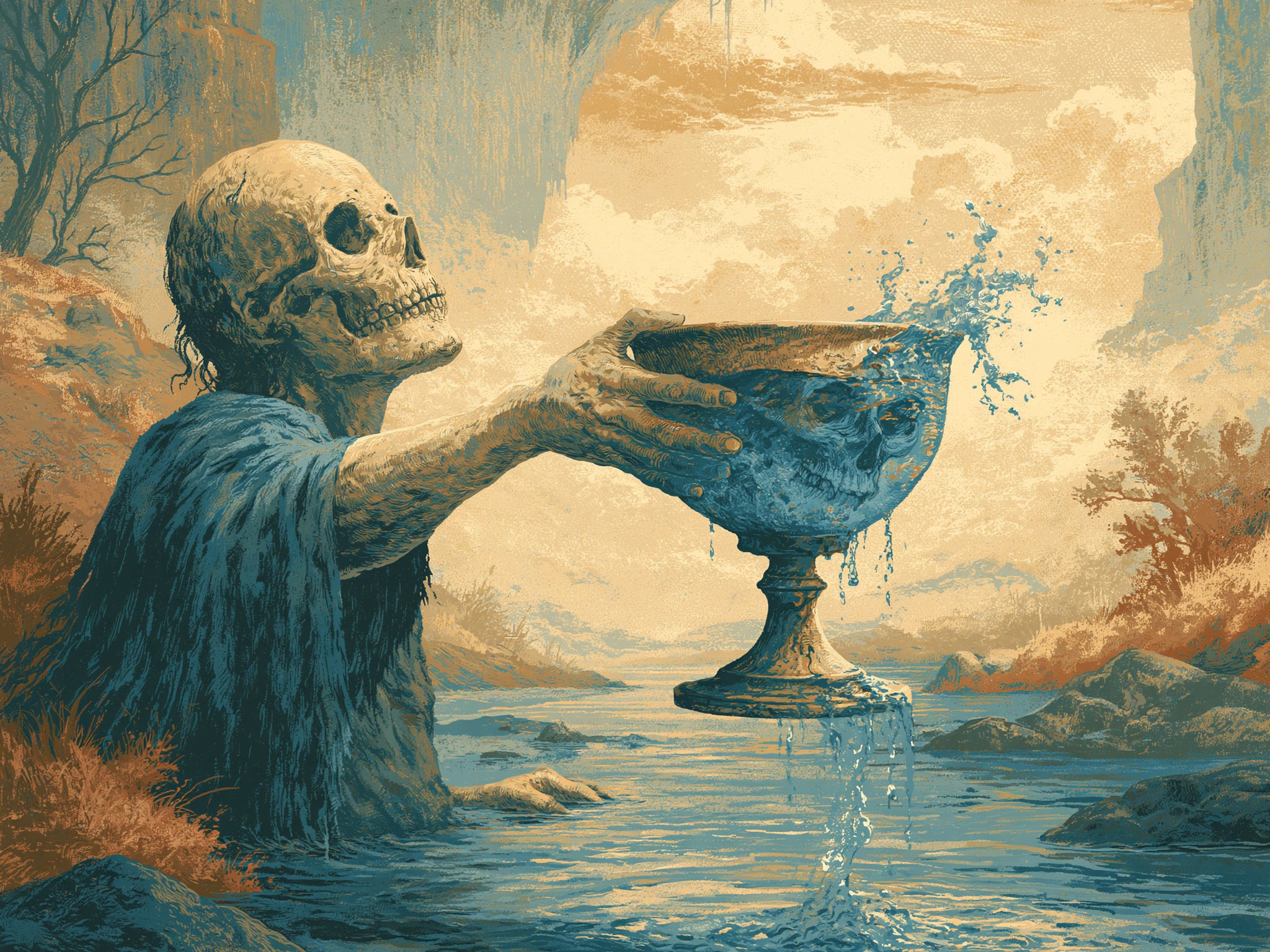
This year over two million humans will lose their lives from drinking water. Many will become infertile, many will develop cancers and some may change their gender.
Clean, safe water is a universal human right. Despite this, the state of the world’s domestic water supplies, rivers, lakes and groundwater is growing steadily more foul as the right we share is withdrawn by out-of-control industries and failing governments.
Warnings of a world water crisis have echoed through the corridors of power for more than a decade, to little effect. In 2026 they shifted from short-term crisis, usually regional, to an era of “water bankruptcy” affecting three quarters of the human species.
Since the start of the C21st the focus in world water policy has, rightly, been on the poor sanitation and waterborne diseases affecting 2.1 billion people, which are the main killer of children in many countries. Lately the water crisis has manifested two more apocalyptic horsemen.
These are water scarcity, driven chiefly by swollen megacities, unconstrained demand for food, groundwater depletion and climate change – and a massive increase in the volume of toxic chemicals being dumped regardless into the environment by industry and other human activities such as waste disposal.
For a generation the water crisis has been regarded as a problem chiefly for developing countries, smugly disregarded by much of the developed world with its C19th water treatment methods. Today water is an emerging threat to every country, all societies, each person. We simply do not know what we are drinking, nor how deadly it may prove.
Take paper for example. Typically, it requires up to 15 tonnes of water to make a tonne of paper. In some countries, as much as 30-100 tonnes of water. The highly poisonous wastewater from papermaking is commonly discharged back into the river to become one more factor in the 9 million deaths per year reported in the Lancet Commission Report on Pollution and Health in 2022. Ponder that number for a moment. It means that next time you meet with five other people, one of you is liable to meet their end as a result of the water they drank.
World water policy still aspires to deliver clean, safe water to all societies by 2030 – but the prospects of achieving this goal for the two billion with bad water are receding, despite a decade of action intended to accelerate it.
On top of that are the looming problems of scarcity and chemical pollution. These affect the developed world as much, or even more, than the developing world. The main sources of water fouling, according to the US National Institutes of Health, are:
Agricultural pesticides, fertilizers and eroded soil.
Hazardous waste sites and landfills
Industrial spills, leaks, discharges and dumping into rivers or groundwater
Corroded pipes that leach lead, copper etc.
Naturally hazardous chemicals, such as arsenic and radon.
500 million tonnes of new plastic microparticles a year.
Sewage, animal and food processing wastes.
Humanity unthinkingly emits more than 220 billion tonnes of chemically-active substances every year into the environment – and most of them end up in water by one route or another. They do not disappear or ‘break down’ but go on and on, combining and recombining into new forms - many potentially harmful - accumulating and recirculating endlessly. It is a cumulative form of planetary poisoning which science has yet to get its head around at scale.
The World Health Organisation lists over 150 chemical hazards commonly found in drinking water. Yet the petrochemical industry manufactures more than 350,000 different substances, the number rising by around 2000 every year. Most of these have never been tested for human or environmental safety and are commonly released for use by industry until such time as a resulting death toll calls them to medical attention in a process that often takes decades and sometimes, centuries. Humanity is thus not alerted to even the merest tip of the iceberg of the chemical threat it now faces.
A particular example are the 14,000 “forever chemicals”, so called because they can endure in the environment remaining hazardous for many years. Known as per- and polyfluoroalkyls (PFAS), they have been in use since the 1930s in substances such as Teflon, nylon clothing, cosmetics, flame-retardants, pesticides and fire-fighting foam. PFAS are now commonly found in soil, air, drinking water, fish and livestock, as well as in most humans. Only a handful have ever been tested for human safety, yet they continue in widespread use. They contaminate around one third of world groundwater which is the major supply for most cities. PFAS are linked to diseases of the thyroid, liver, kidney, cholesterol levels, testicles, obesity, low sperm counts in men and impacts on the unborn child.
A related category of common water pollutants are the endocrine disrupting chemicals or EDCs, which mess with the body’s hormone and signalling systems, causing over 109 known diseases including cancers, heart disease, metabolic disorders, infertility, gender change and developmental issues in children.
While advanced water treatment systems in big western cities can cope with most known pollutants, two factors are making matters worse. First, the oil industry as it switches away from fossil fuels to other types of product is mass-producing new chemicals of unknown toxicity, far faster than the water treatment industry can keep up. Second, countries such as the USA are rolling back environmental laws, exposing their citizens to massively increased hazards in water, air and food, while rapid economic development in Asia and Latin America is redoubling toxin loads in fresh water. In Europe 60% of all surface waters are polluted.
Making water matters worse is the gargantuan thirst of the Artificial Intelligence industry and its data farms, which are tipped to consume between 4-7 billion tonnes of fresh water by 2027, mostly in some of the world’s most water-stressed regions. This water will be withdrawn from farmers and cities, driving up prices for everyone and magnifying global scarcity while enriching the undereducated tech bros who run the AI corporations. Besides creating scarcity, AI will also contaminate water through the 32 minerals it mainly uses to build its devices and data storage which include toxins such as arsenic, mercury, lead, cadmium, chromium, zinc, nickel, antimony, cobalt, and beryllium.
The State of the World’s Rivers provides a disturbing insight into the ongoing degradation of humanity’s most vital resource – clean fresh water. It lists the following as the world’s most polluted river basins: Mekong; Columbia; Dvina; Neva; Amu-Darya; Tocantins; Mississippi; Orinoco; São Francisco; Wisla; Hai Ho.
To deliver clean water to the 2.2 billion people who presently lack it will cost the world around $1 trillion by 2030. But, as this article demonstrates, that is but a small part of a water crisis running rapidly out of control, across both the developed and developing worlds. A resource crisis that, over history has led to almost 3000 wars and social conflicts.
While the geopolitical spotlight remains on issues such as climate and nuclear weapons, far too little is being done to remedy the poison chalice which modern civilisation is presently handing to its children and grandchildren. And far too late.
Many thanks, Julian. It meshes up with Geoff Deihl's May 24 piece on the subject of Data Center water consumption found on substack.com. He describes a large DC consuming "up to five million galloons of water per day, equivalent to the use of a town of 10-50K people".
Very good elaboration of the quality of accessible water, Julian! We search now for the Holy Pail.. clean, potable water.
We gotta desal. And deliver it to the dried lands with their biospheres.