

A nature-based food revolution

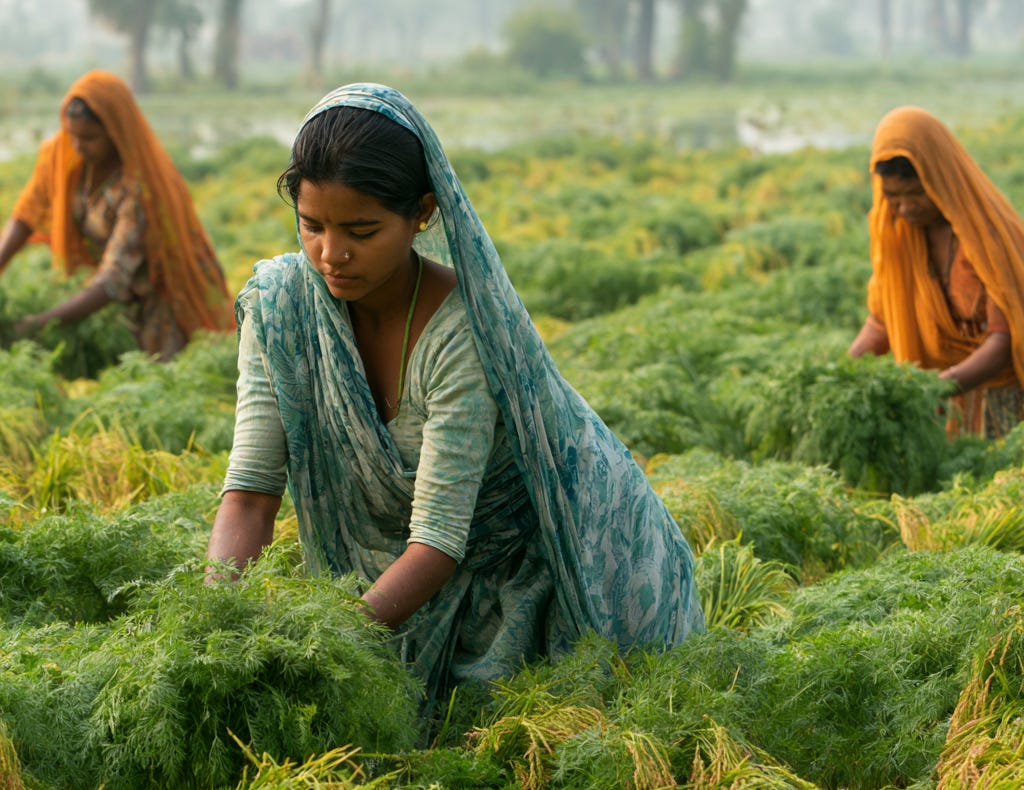
Forget AI. The technological advance that will save the most human lives is being led by two million Indian farmers, who are pioneering advanced natural food production in a revolutionary movement that is spreading almost by the hour.
An overfed but badly-nourished, global society has largely forgotten what it means to go hungry. So long as supermarket shelves are a-bulge with empty industrial calories laced with petrochemicals, people tend to forget that no human or community can last long without good food. A super-El Nino bearing down on the world’s agriculture threatens to reinforce the lesson.
The global food crisis has been building steadily for two decades. It is driven by massive uncontrolled soil loss, growing water scarcity, failing farm ecosystems, overuse of poisons, declining nutritional value of food and a climate running rapidly beyond the realm of technical solution.
In India, where climate-driven famines have occurred frequently over thousands of years, the hard-learned lesson that food comes first has not been lost. A farmers group called Andhra Pradesh Community Managed Natural Farming (APCNF) has received the world’s largest environmental award, the Food Planet Prize 2026, for developing and sharing a new model of science-backed agroecology aimed at securing both food production and the environment that supports it.
Driven primarily by women’s groups, the Andra Pradesh farming revolution began with just 11 farms in 2018. Thanks to 10,000 eager volunteer trainers it has been taken up by over 1.8 million small farms in 21 Indian States in under a decade.
The AP model has already been shared with farmers in Zambia, Indonesia and Sri Lanka, with Brazil, Mexico, Nigeria and the DRCongo due to follow shortly. The plan is to extend it worldwide by the mid 2030s.
Unlike a good many ‘natural farming’ movements, the Andra Pradesh model is science-driven, fusing state-of-the-art soil and plant science and microbiology with traditional methods and widely-accepted principles of natural farming.
In essence, the AP approach gets soil microbes to do the heavy lifting. These are used to restore lost fertility, build nutrient cycling and boost carbon storage while also improving the aeration and water penetration of the soils, leading to better, more nutritious and drought-resistant crops in harsh climate times. They eliminate the need for toxic chemicals and reduce the need for industrial fertiliser.
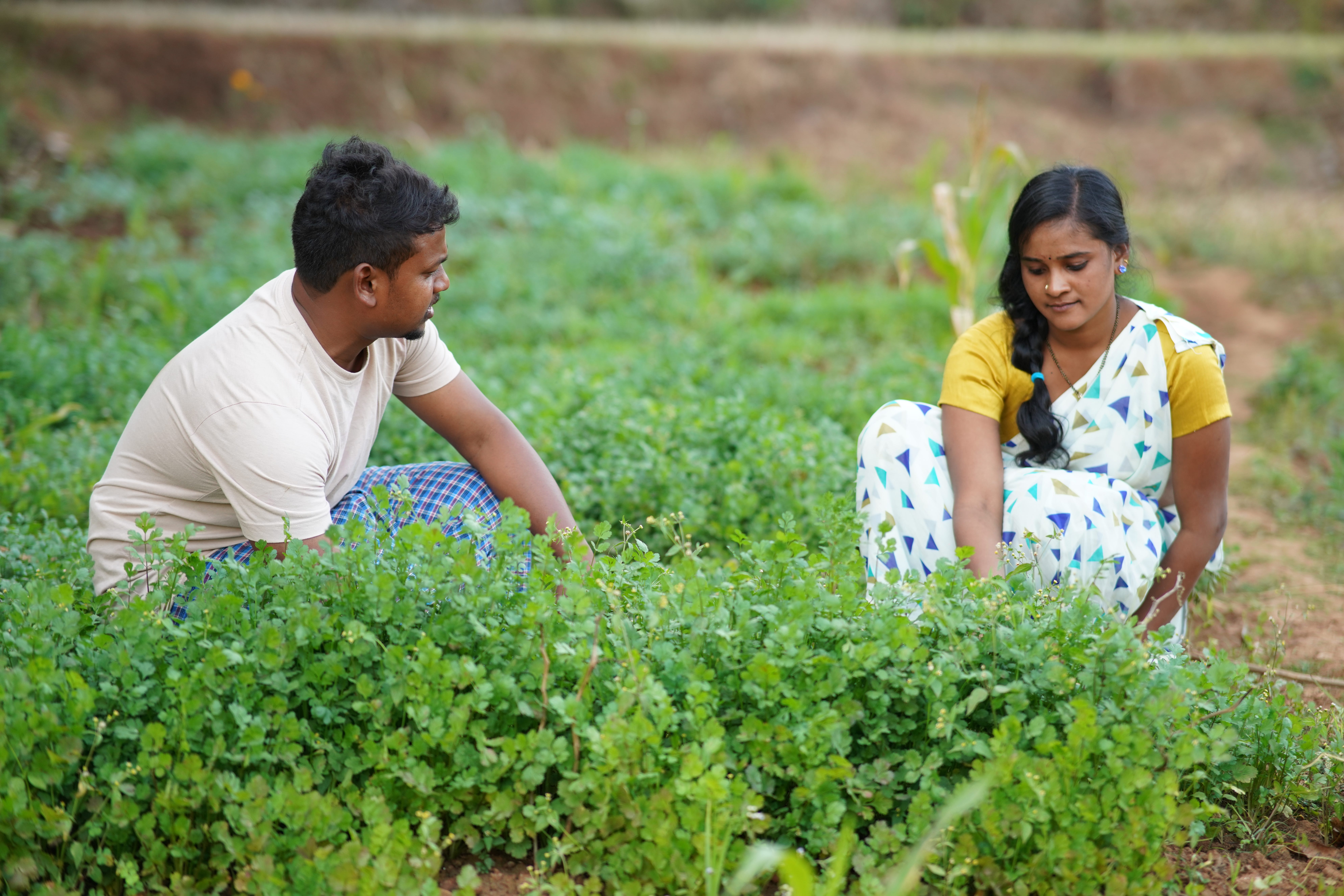
While it has strong support from India’s State and Federal Governments the lynchpin of the project’s success are hundreds of women’s self-help groups, who ensure local ownership by participating communities. At local level the program seeks to engage 10-15 per cent of village farms in the first year and reach over 80% by years 3-5.
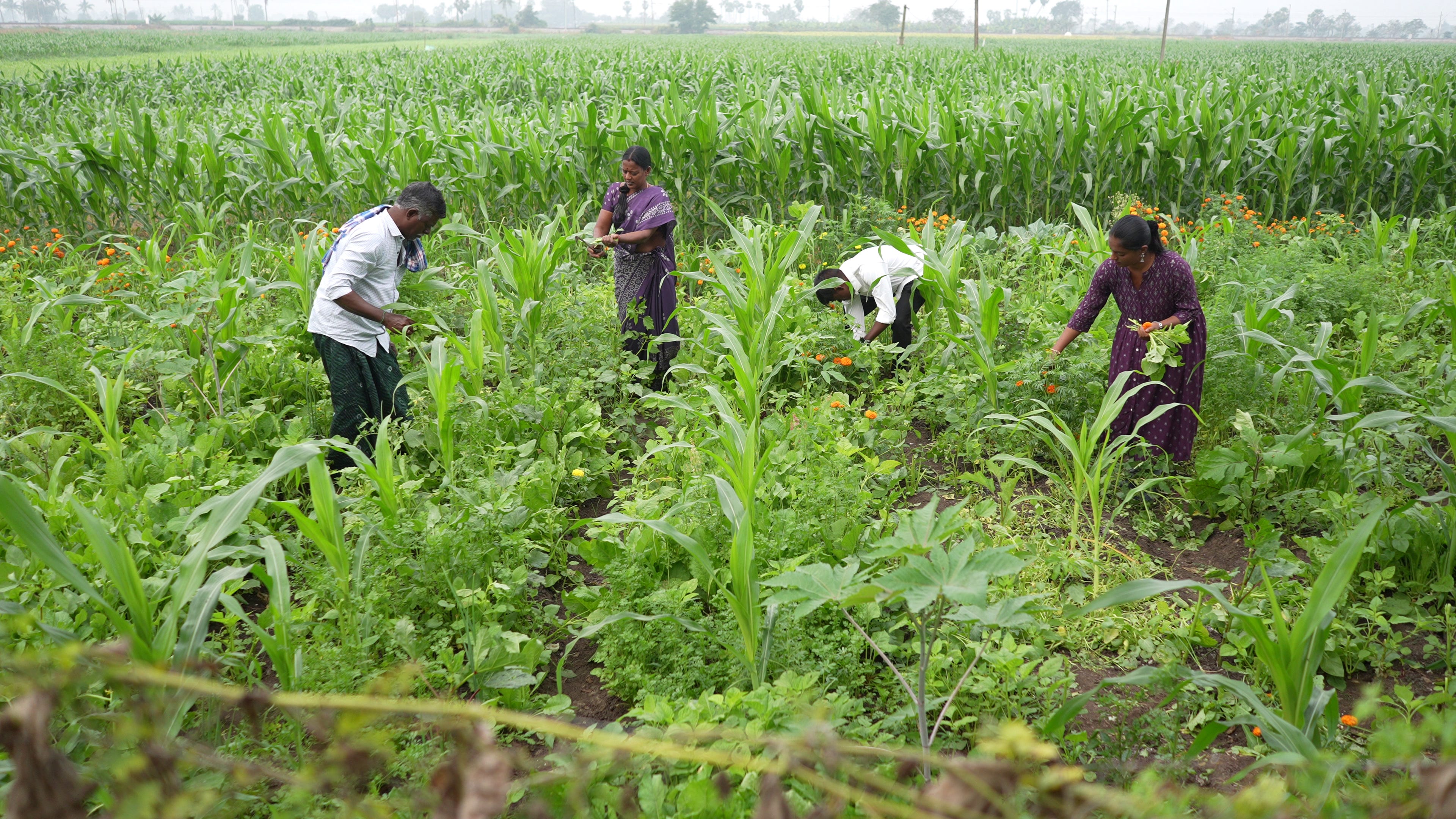
At its heart, the AP model uses year-round cover crops to protect the soil, promote microbial activity, prevent weeds, end chemical use, rebuild soil fertility and structure, and conserve more moisture to ‘droughtproof’ farms. More than 30 different crops are grown, from grains and legumes to leafy vegetables, cover crops and soil improvers. The technique has been refined for farming at every scale from kitchen garden and smallholdings up to tenant farms and commercial operations. Above all, it is designed to deliver a viable livelihood to poor farmers with only a few hundred square metres of arable land, who can start earning income within 15 days. In practice, farm incomes were found to improve by between 19-36% in the first year.
While it might look like a case of ‘high science/low technology’ the AP method does not shun recent technical innovations such as the use of drones for farm planning and seeding. It uses sophisticated innoculants to re-establish complex soil biology in dying soils. Also, unlike most modern farming methods, the AP approach focuses strongly on the nutritional value of the crops being grown, especially for the families growing them. In other words, it sees farming as being about healthy food – not as the neglected limb of an uncaring industrial machine focussed purely on money.
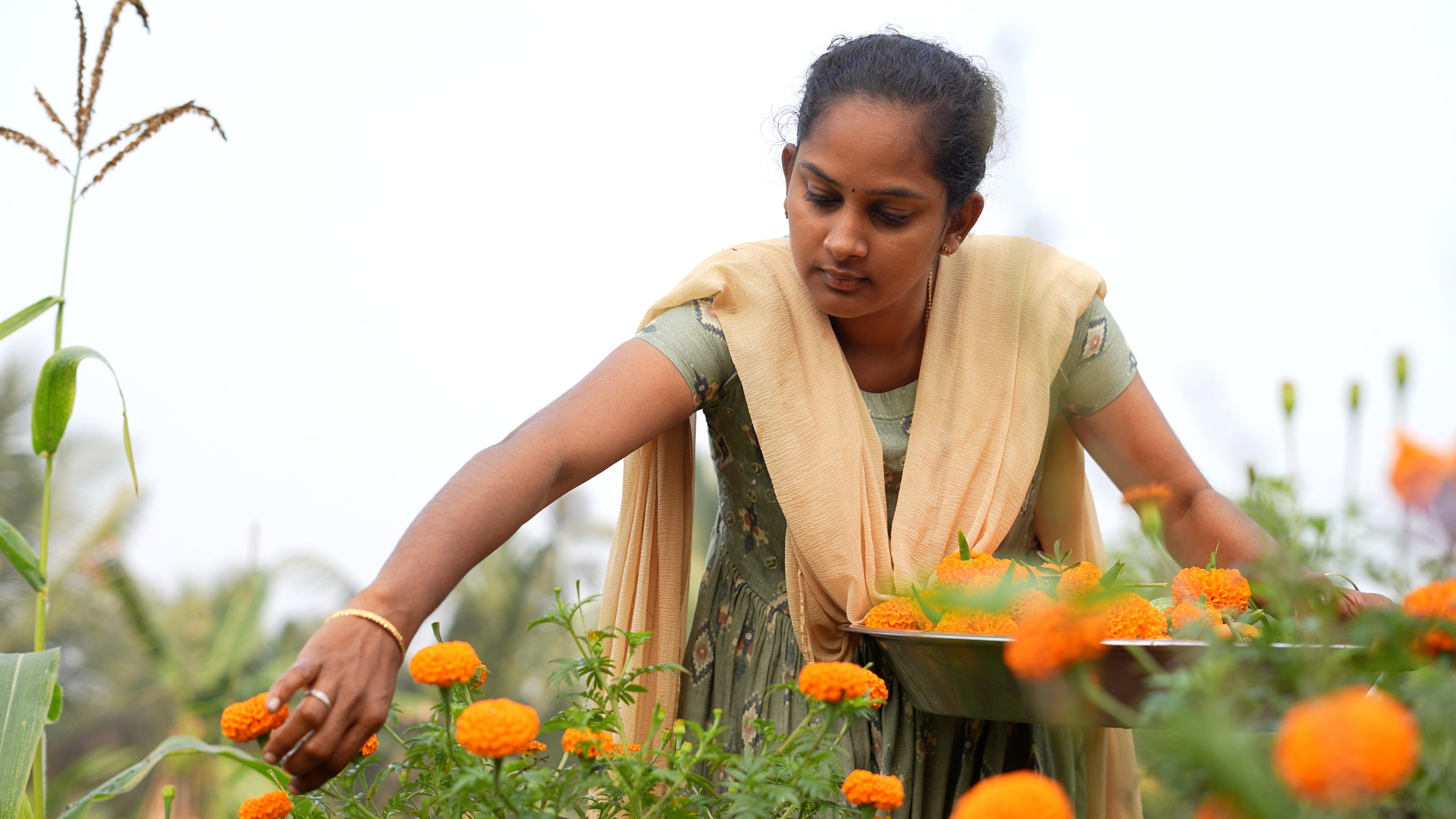
This represents an important departure from traditional western agro-industry, with its focus on bulk commodities of declining nutritional value, health and safety – one from which more and more western farmers, shackled to corporate food, increasingly wish to break free.
The US$1.5 million Curt Bergfors Food Planet Prize will go towards opening up more demonstration sites worldwide for the AP natural farming model, adapting it to local conditions and farmer needs, to building new scientific partnerships, establishing a natural farming leadership course and training a cadre of “farmer-scientists” able to measure the results they achieve scientifically.
The salient aspect of the Andra Pradesh project is that it is not alone. Worldwide the regenerative farming and food movement is mushrooming as farmers abandon the toxic, mechanical systems of yesterday. Worth an estimated $17 billion in 2026, ‘regen; is forecast to reach $50bn by the early 2030s, due to rising farmer and consumer demand.
Whether such a scale-up can feed a hungry planet of 9 billion people, beset by climate crisis, resource loss and mass extinction remains doubtful – unless at the same time there is success in voluntarily lowering the human population closer to what the Earth can actually carry long-term. The fact that women are leading both global movements – family planning and regenerative food – gives grounds for sober hope that a collapse in human society can be defrayed, and that female intelligence will prevail over male hubris.
While the masculine techno boosters hail developments such as Artificial Intelligence, robotics and biotech as the next big frontiers in technology, regenerative and renewable food are arguably far more significant to the human destiny – and to the fate of every individual living on Earth.
After all, nobody can eat AI, robots or corporate dollars. Nor can those alone protect and restore a habitable planet for our grandchildren.
Another great piece Julian thank you. Such a pleasure to read an uplifting essay on Substack! And I agree, we need women to lead the way. A lot of interesting comments as well especially on population reduction. Cancelling the developing world's debt and investing in female led education would definitely lower birth rates but I can't see it actually reducing the population as such unless pandemics and famines and other horrific scenarios occur (some are already occurring, see USAID and the Iran war).
"Unlike a good many ‘natural farming’ movements, the Andra Pradesh model is science-driven, fusing state-of-the-art soil and plant science and microbiology with traditional methods and widely-accepted principles of natural farming."
But will this "science-driven" natural farming system be effective at 2 C (2035)? Noting that prolonged exposure (farmers) to 2 C will trigger fatal heat stroke even in young, healthy, hydrated human biological organisms resting in shade.
Noting that seed viability is steadily declining and photosynthesis is steadily slowing.
Noting that up to a 12 F heat increase is projected for this century with half occurring by midcentury (NOAA and EU climate reporting agencies).
Will this system be effective when the AMOC stops (projected for midcentury) with plummeting temp fluctuations in the 10-15 C / 18-27 F range in the northern zone; even more extreme heat in the temperate zone and a multi-billion human die off (loss of farm labor and knowledge)?
Will this system be effective as drought continues to steadily expand globally? Noting that freshwater resources abruptly crashed in 2014 and ongoing.